
Learning from “Mud Pizzas”: Exploring What’s Underneath Us!
Emaline Relyea-Strawn, Youth Education Coordinator [TerraCorps]
Fall at the CitySprouts gardens are full of many colors, smells, tastes and different textures. It is a beautiful time of encouraging curiosity and connection to the natural world by engaging all five senses throughout the garden.
Students have been hard at work! Squash vines circle the garden beds, beans climb their trellis’, marigolds brighten the garden, fuzzy lamb’s ear plants produce exciting kid discoveries, and tomatoes allow for fun tasting and exploring.
But what goes on underneath all this greenery and color, and why should we learn about it?
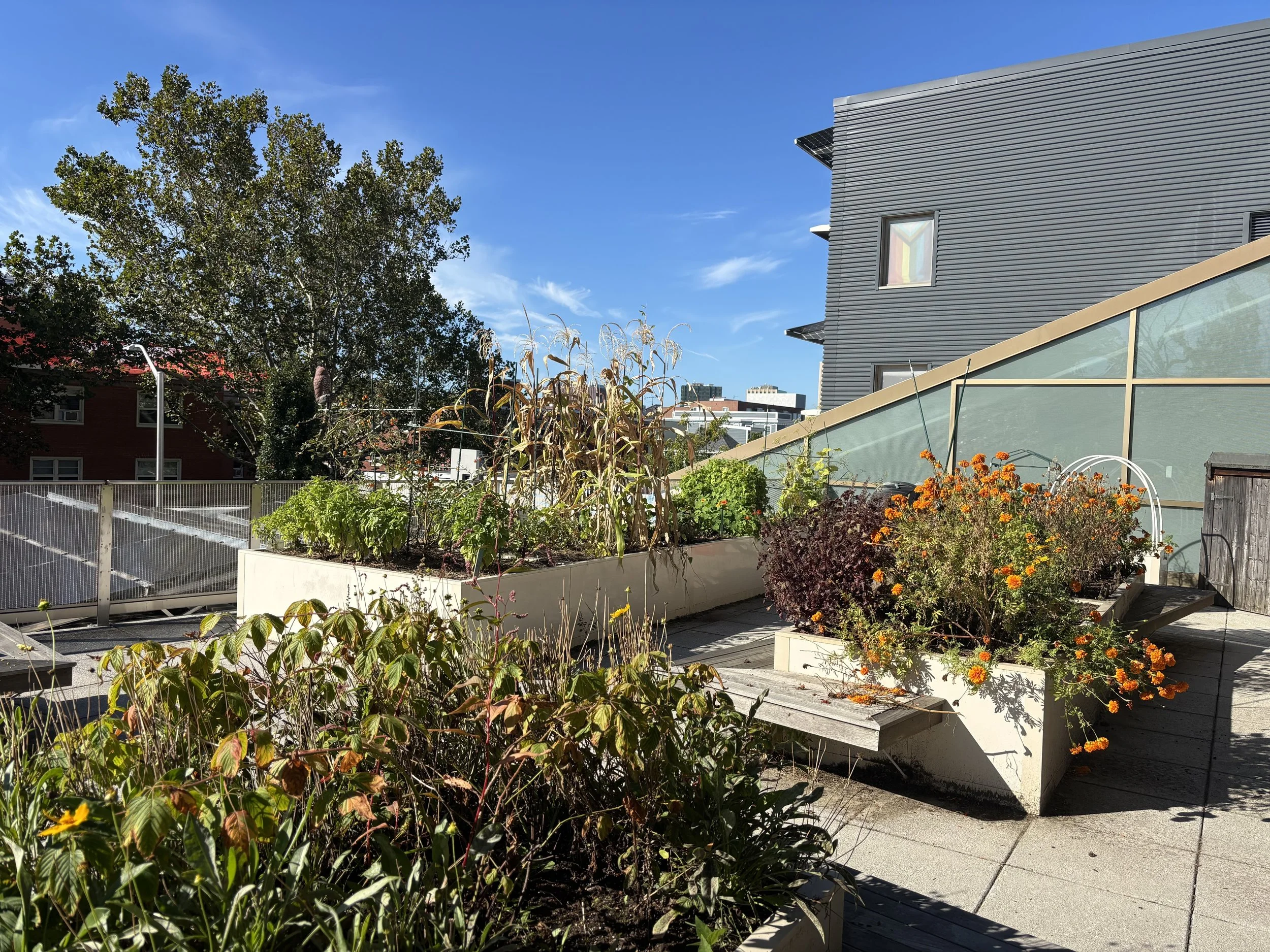
Various plants in the garden beds!
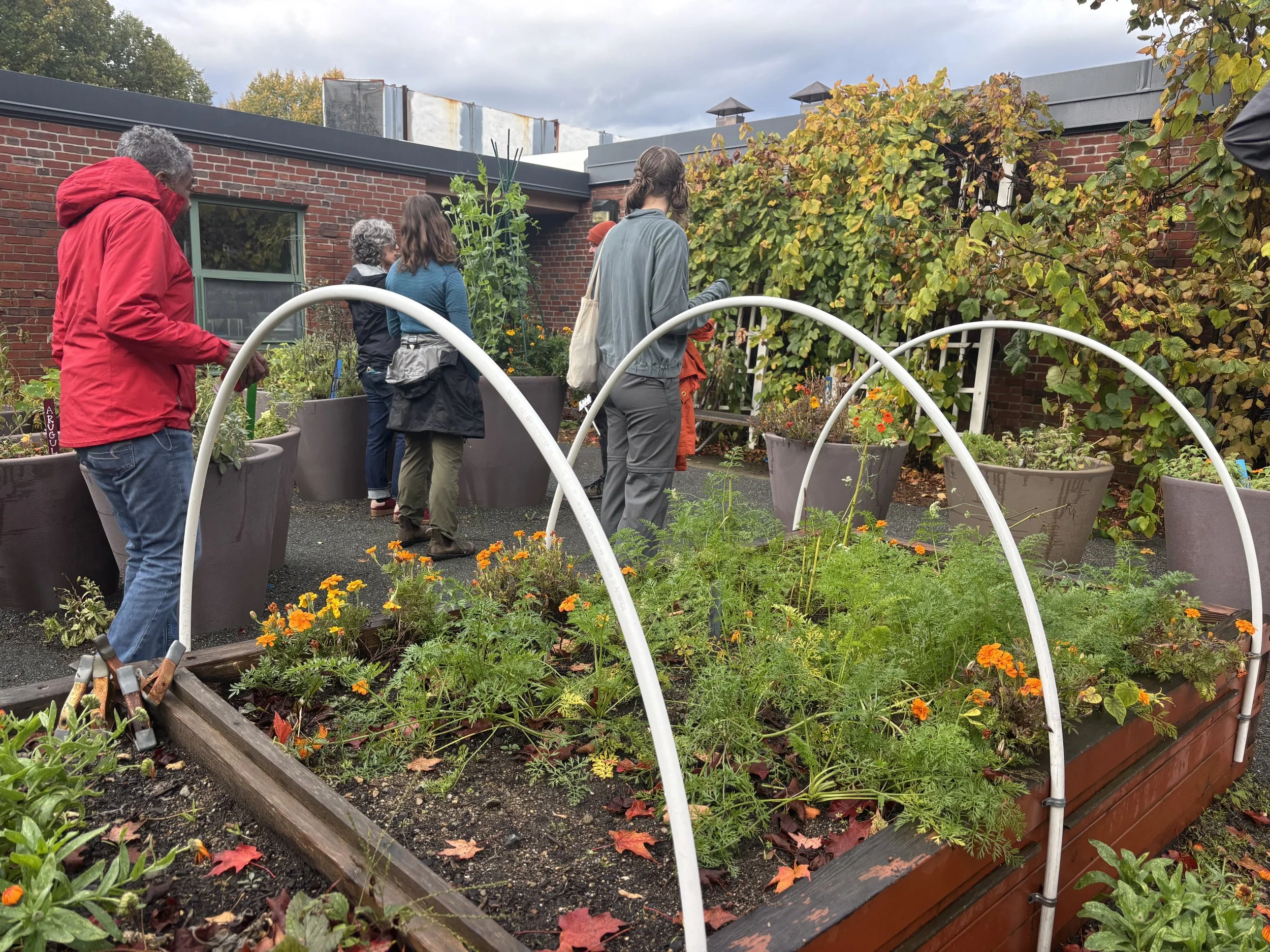
Garden Educators learning and practicing curriculum outdoors
This is the question that students at the Baldwin Early Learning Pilot Academy explored this month.
On a beautiful sunny fall day, students gathered around two trays. One tray had grass growing on top of soil, with visible roots winding its way down. Another, had a chunk of soil with nothing on it.
“Today we are going to do a science experiment,” Gardener Isabelle says. She explained that the watering can would act as the rain coming down and asked students to make predictions of what would happen to the tray of just soil, no grass. After a discussion amongst the students on what roots are, the experiment began:
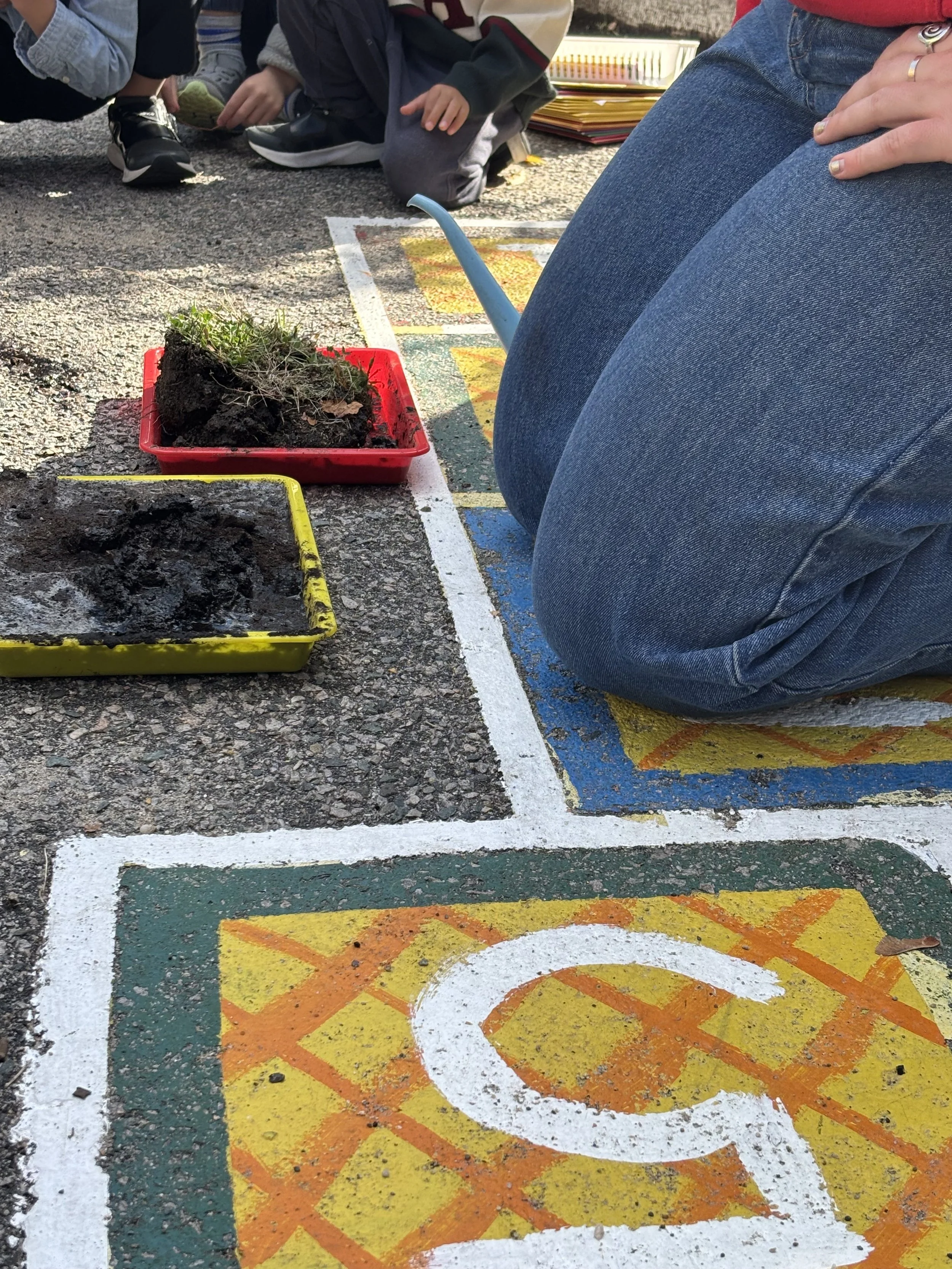
Close-up of the two trays, one with soil and one with grass growing in soil
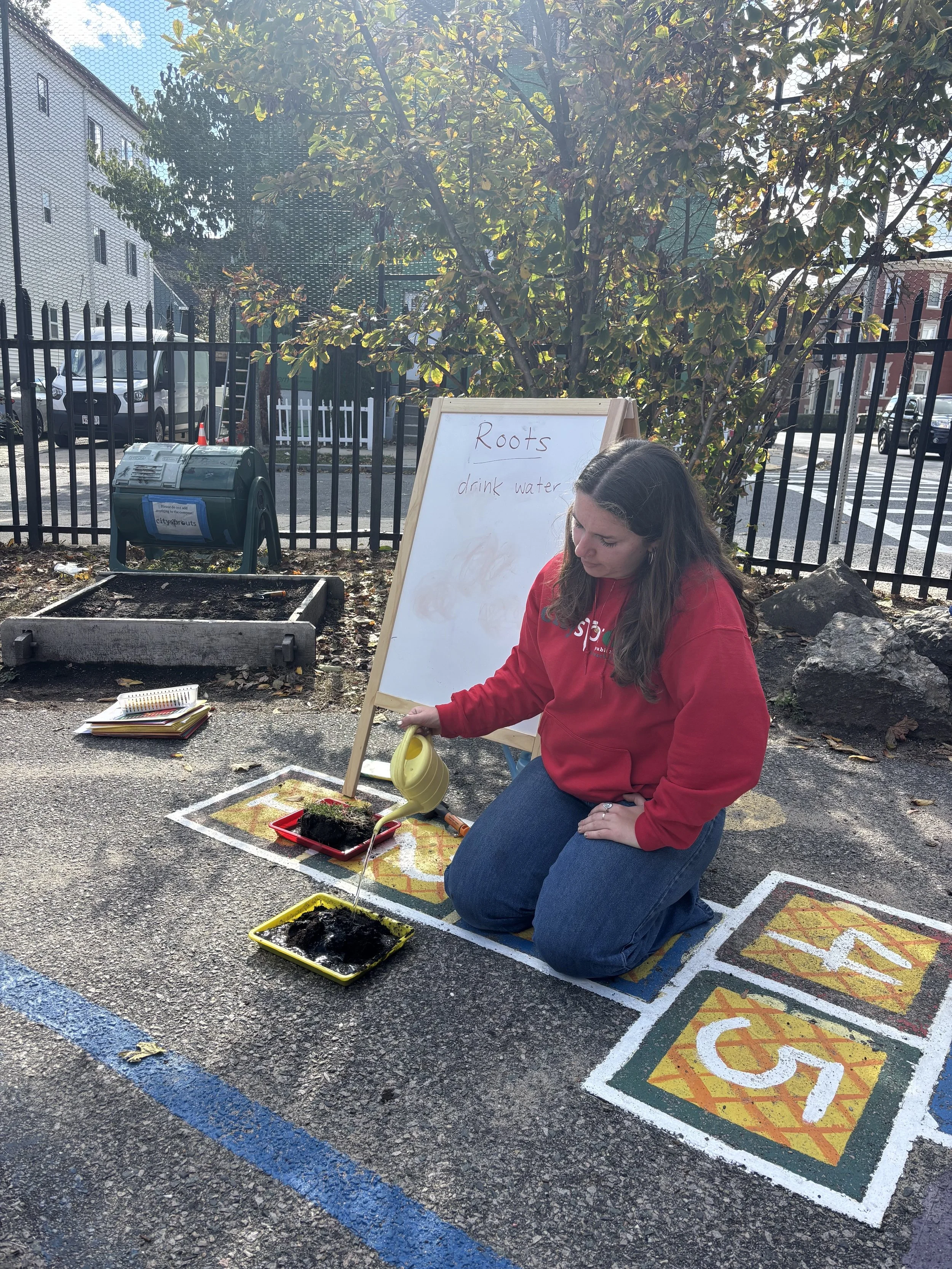
Gardener Isabelle watering a tray with soil
As the “rain” from the watering-can came down on the tray of just soil, transfixed students crouched closer and silently stared at the dissolving pile of soil shifting before their eyes. The exclamations of wonder and excitement then began to reverberate throughout the class.
“It’s pouring!” one student said. “It’s smushy,” said another. “It’s a mud pizza with no toppings!” remarked a third student.
Next, the “rain” came down on the chunk of grass and soil in the other tray. This time, a resounding “woah” spread across the class as students watched the soil structure remain in place, despite the water.
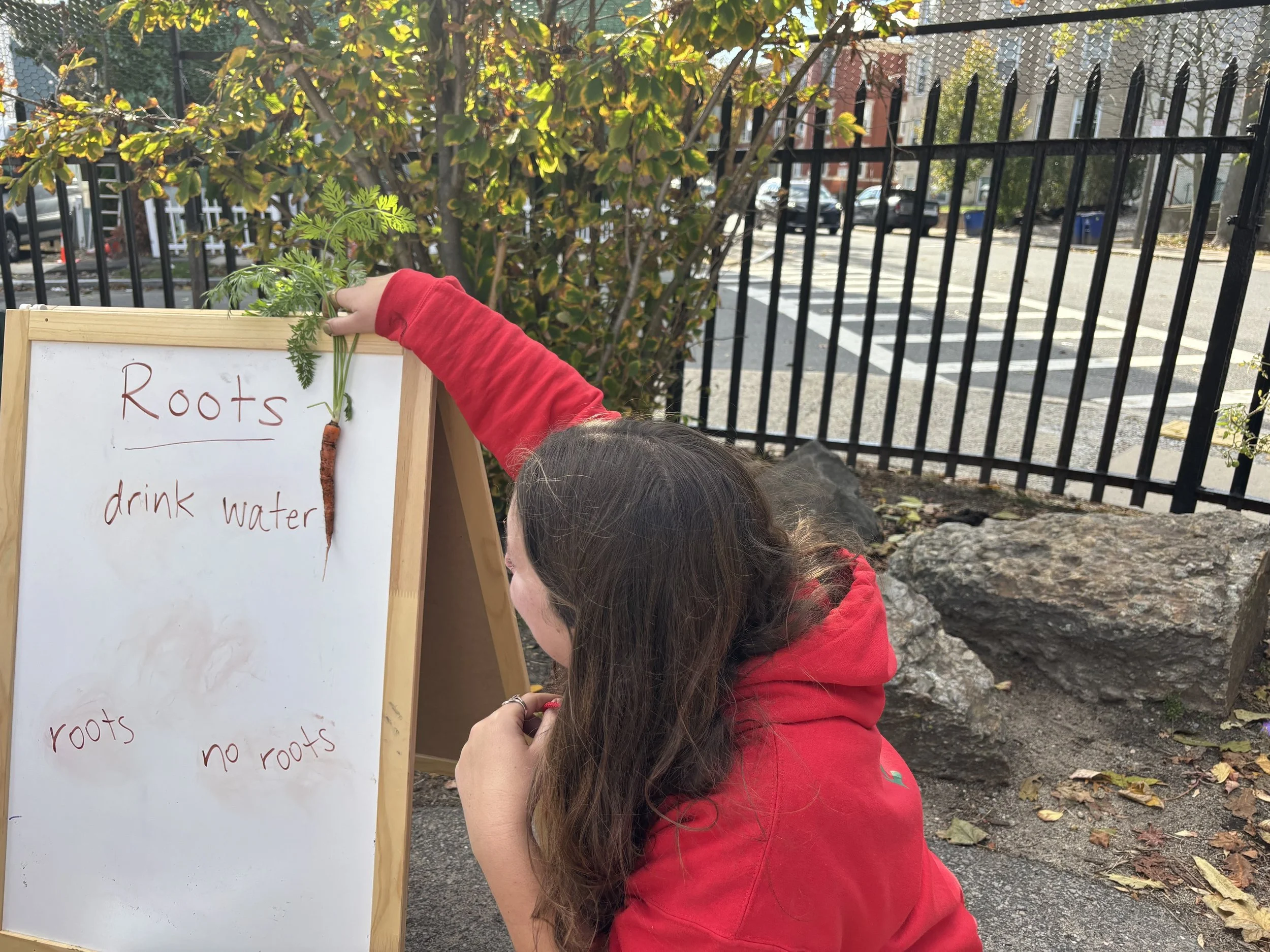
Gardener Isabelle teaching students about roots
Gardener Isabelle proceeded to explain how roots play to keep the soil structure stable which is very important in times of lots of snow and rain: a concept that is now ‘rooted’ in a real-life example students can refer to and understand.
Making observations and new discoveries with the ‘ordinary’ things like dirt and grass makes the CitySprouts classroom a space where each and every student can make personal connections because this material is right under your feet: literally.