Alex Frank, Senior Program Manager
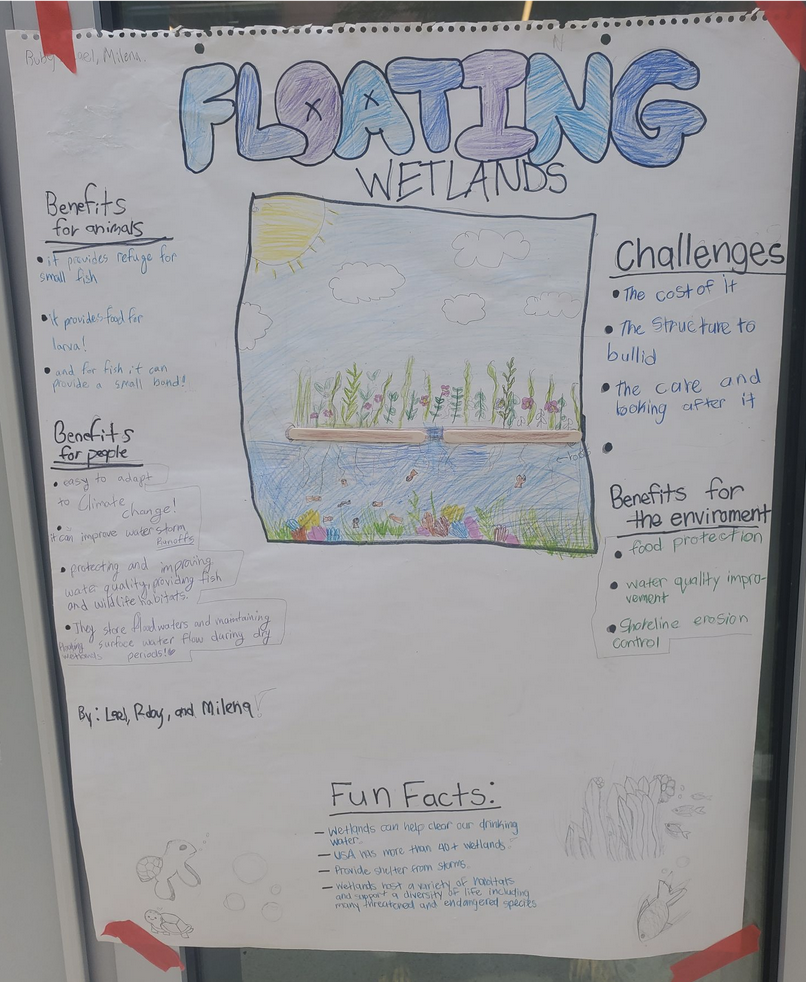
“Lael, Ruby, Milena, you’re up!” A friendly giggle and shy shuffle of feet follow as the 3 soon-to-be 7th graders walk up to the front of the group, rolled-up poster in hand. As they unfurl the sheet, the words “Floating Wetlands” appear in colorful bubble letters.
It is the final day of the Summer Green Team, and youth are presenting on the urban greenspaces they researched. The group is joined by their peers and their families, who have come on this final day to see their youth present, receive their certificates, and enjoy a picnic in the garden.
This end-of-summer bash represents a culmination of all that the youth have learned and worked on throughout the season. Over the past five weeks, they have completed a myriad of projects.
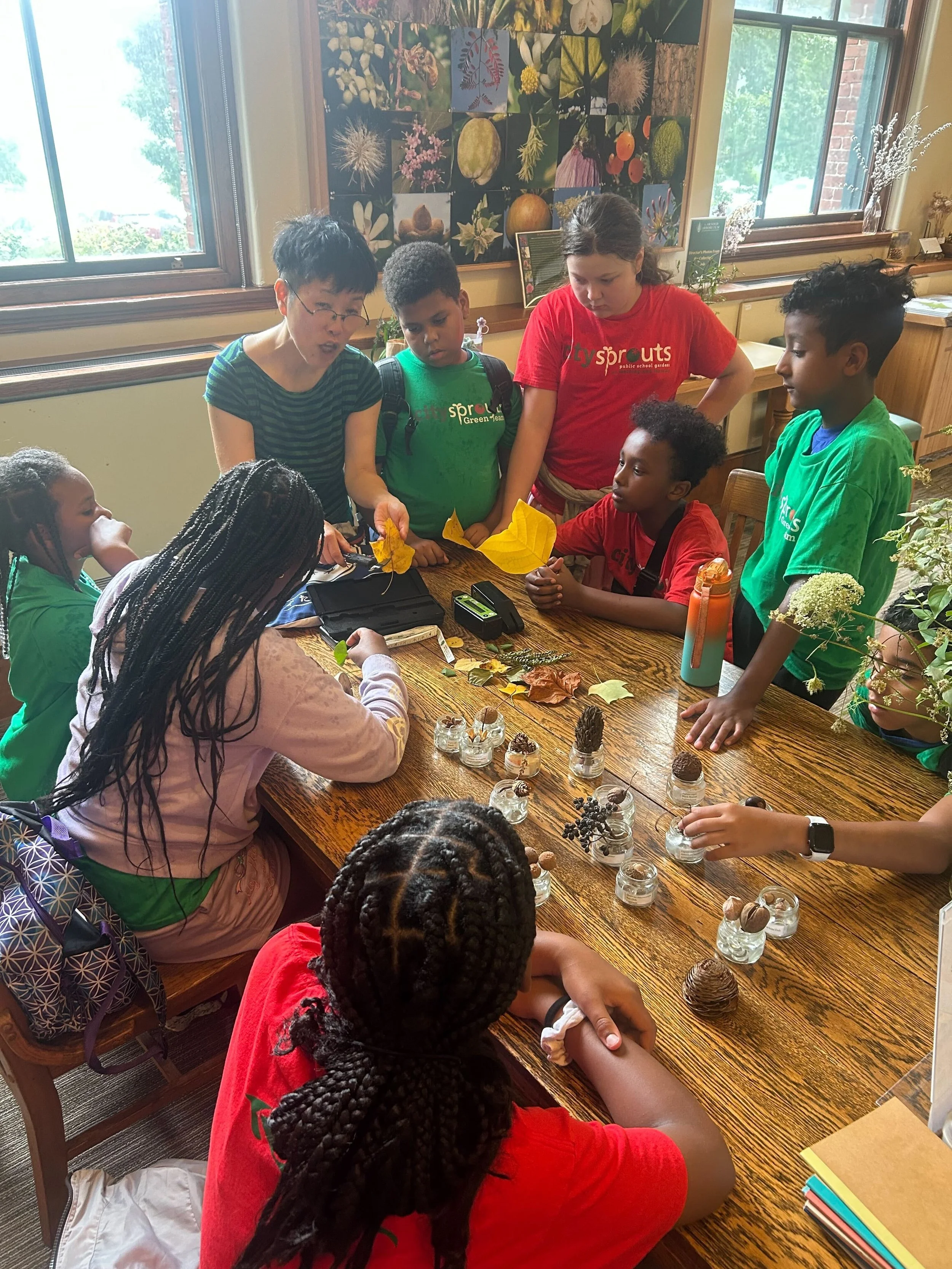
They have weeded, watered, and harvested in their gardens and learned to identify the plants and animals that call it home. They have run science experiments on plant propagation and soil degradation, and cooked recipes drawn from a wide array of cultures representative of the diverse makeup of their group.
And they have explored numerous greenspaces throughout the city, including urban farms, harbor islands, and yes, even floating wetlands.
The Summer Green Team is a tuition-free program that aims to serve underprivileged and historically marginalized communities across Boston and Cambridge. Youth accepted into the program are asked to come each day prepared to learn, and they gain skills in everything from farming to scientific research that will help them as they prepare to enter the workforce in the years to come. More importantly, they immerse themselves in the greater green community of Boston, meeting with community leaders and learning the importance of building sustainable, eco-friendly cities for the future. Their research projects and final presentations offer an opportunity for them to focus on an area of interest and gain leadership skills they will use as the next generation of environmental stewards.
At the summer bash, the 3 begin their presentation. “Floating wetlands are man-made structures put in the middle of the river for plants to grow on,” Lael explains. “The benefits for animals include that it provides refuge for fish and food for larvae!” Milena continues. “And they help clean our water and help us adapt to climate change,” Ruby concludes. As the group turns to their audience for questions, a hand shoots up.
“What inspired you to research these ‘Floating Wetlands’?”
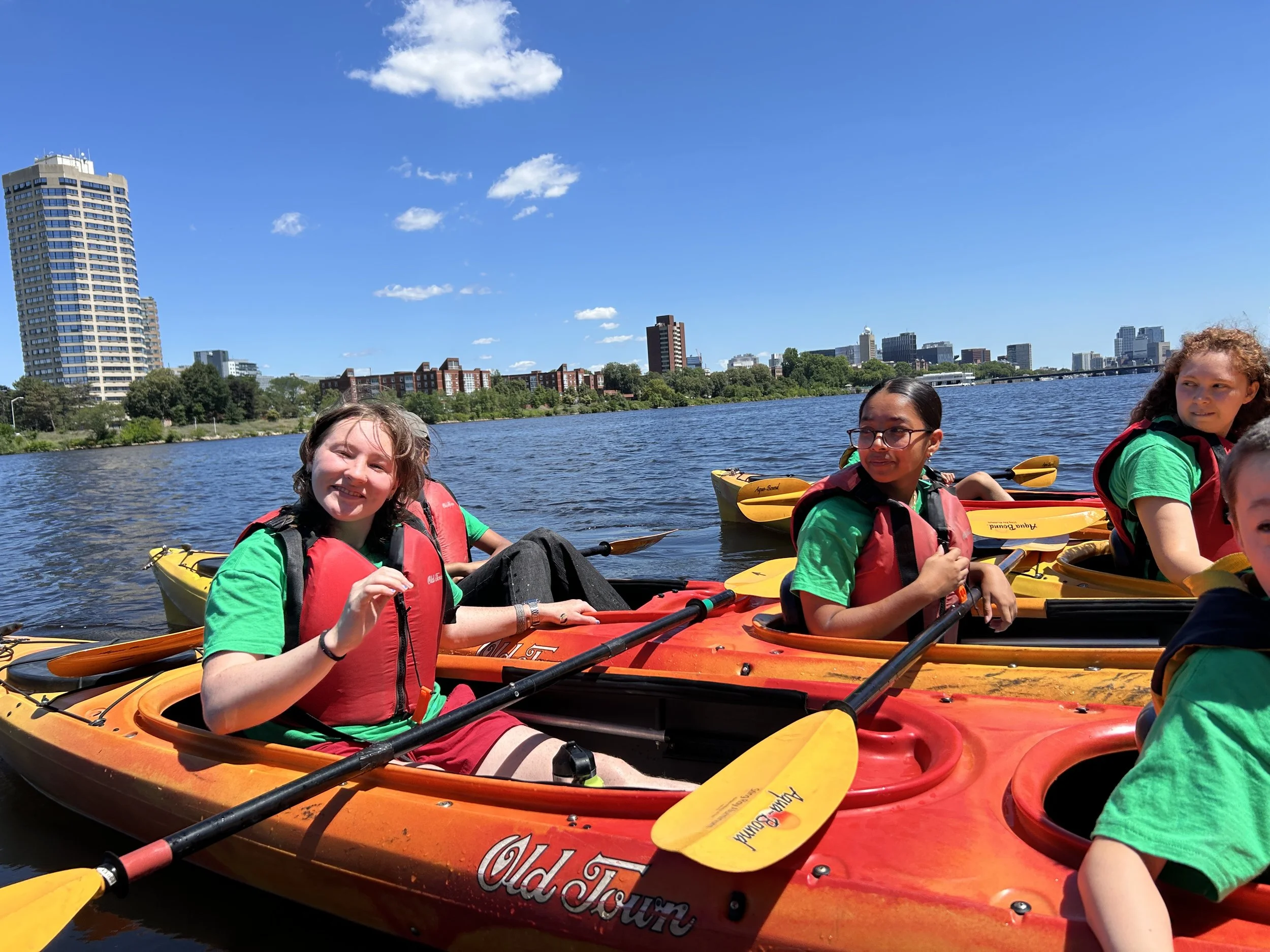
After the three look sheepishly back and forth at each other, Milena finally chimes in. “We went kayaking out to see them on the river, and thought they were really cool. We wanted to learn more about them and see if we could make more of them in the river.”
The challenges humankind will face in the coming years due to climate change are daunting and innumerable. With programs like the Summer Green Team, however, we can help inspire the next generation of environmental leaders to take action to make this world a better place for all who inhabit it, one Floating Wetland at a time.