Hesper Khong, Community Engagement Coordinator [TerraCorps]
When we step foot into one of CitySprouts 25 gardens, there is an undeniable wonder and awe that settles in the air. Being able to weave a garden space into a school or community center’s unique infrastructure is a feat in itself, but what happens after the garden has found its home? What does it actually take to care for 25 distinct garden spaces?
There are many hands that have touched and contributed to CitySprouts’ gardens to be what they are today; this specific blog seeks to highlight a small portion of the work done by the current dynamic duo that is CitySprouts’ Operations Team: Maddie Kartoz and Stella Dzialas.
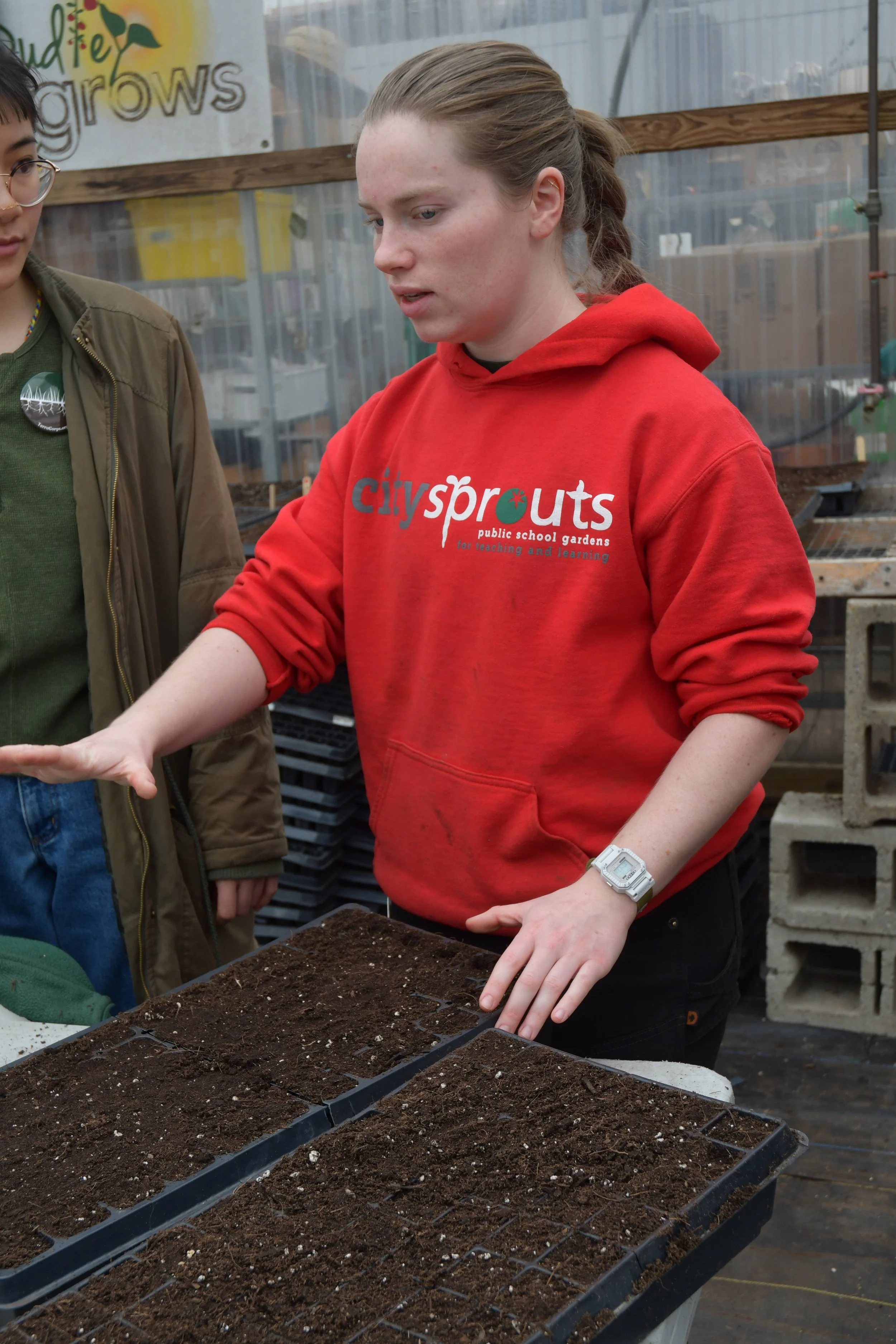
Maddie often compares CitySprouts’ 25 gardens to an urban farm that has been split into 25 unique pieces! Each of these gardens’ planting season truly begins at the Dudley Greenhouse in Roxbury with a great big brainstorm in March. While this time of year can be quite hectic in preparation for the summer and school year, this period is one of Maddie and Stella’s favorite seasons. The process of sowing seeds can be a meticulous task with many factors to take into account, such as the possibility of seeds that don’t sprout. But it’s also an opportunity to reflect on the CitySprouts’ gardens and enjoy being in community with other folks at the Dudley Greenhouse!
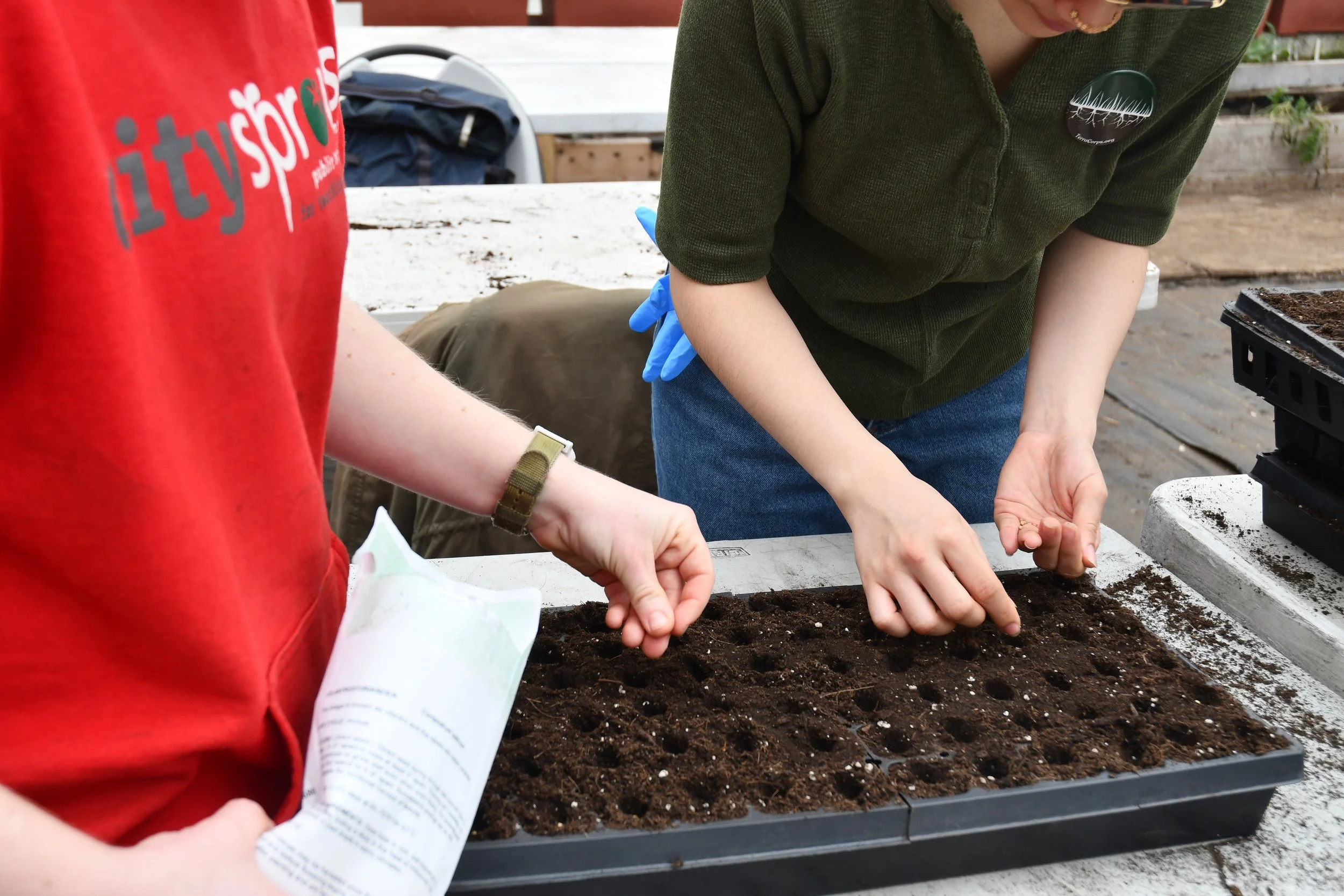
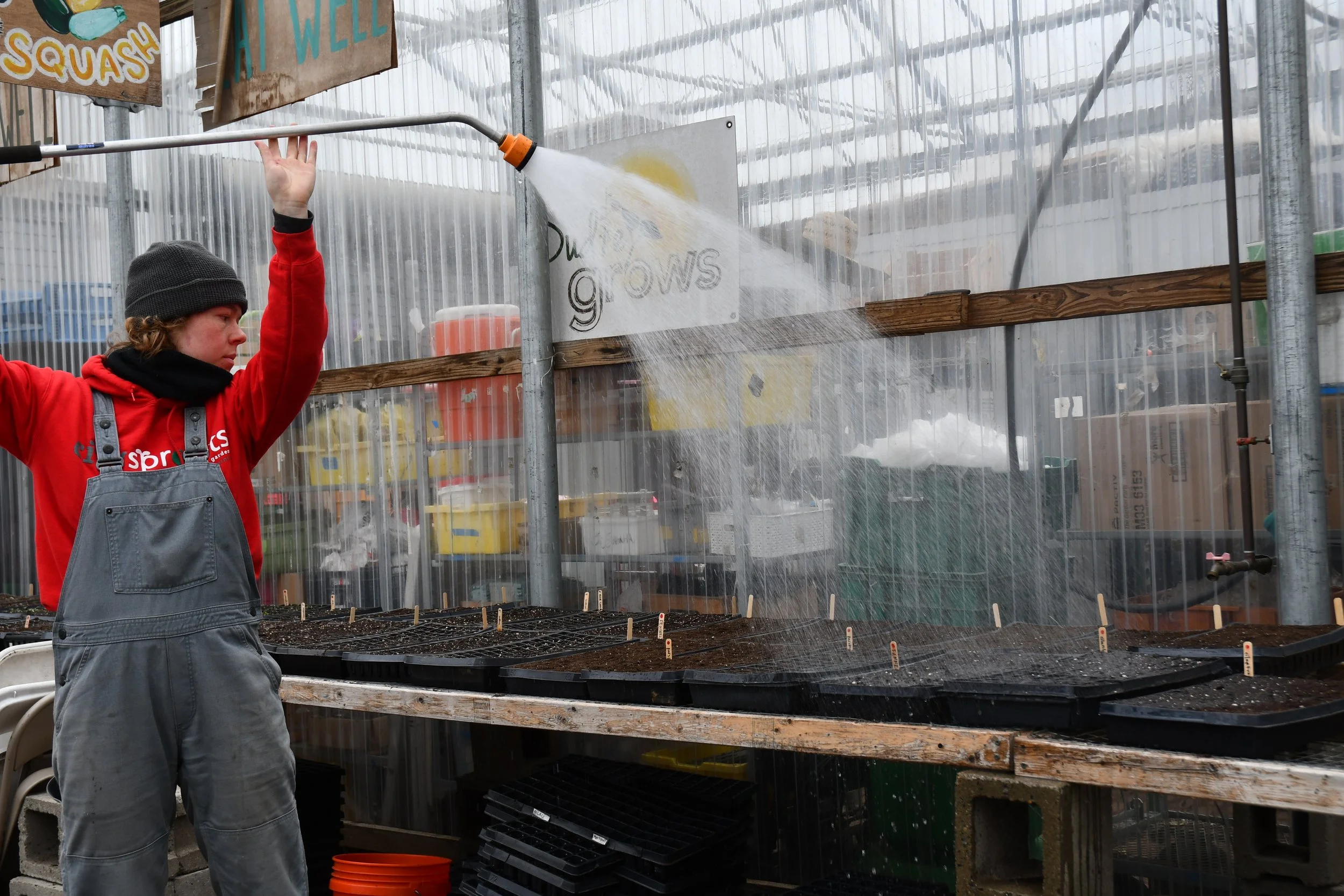
At the Dudley, Stella and Maddie refer to a CitySprouts Standard Gardens document as the foundation for what seedlings could be needed for each schoolyard garden. Factors such as each garden’s sunlight exposure, physical space and size, and district cultural makeup are considered before they calculate how many seedlings of each type of plant is needed. Afterwards, Maddie and Stella refer to their calculations and begin sowing seeds for seedling distribution. They will then acquire various seed trays and fill each with an ample amount of dirt and sprinkle organic fertilizer on top. Next, a small hole is made for the appropriate amount of each seed to be evenly dispersed before they receive a generous drink of water!
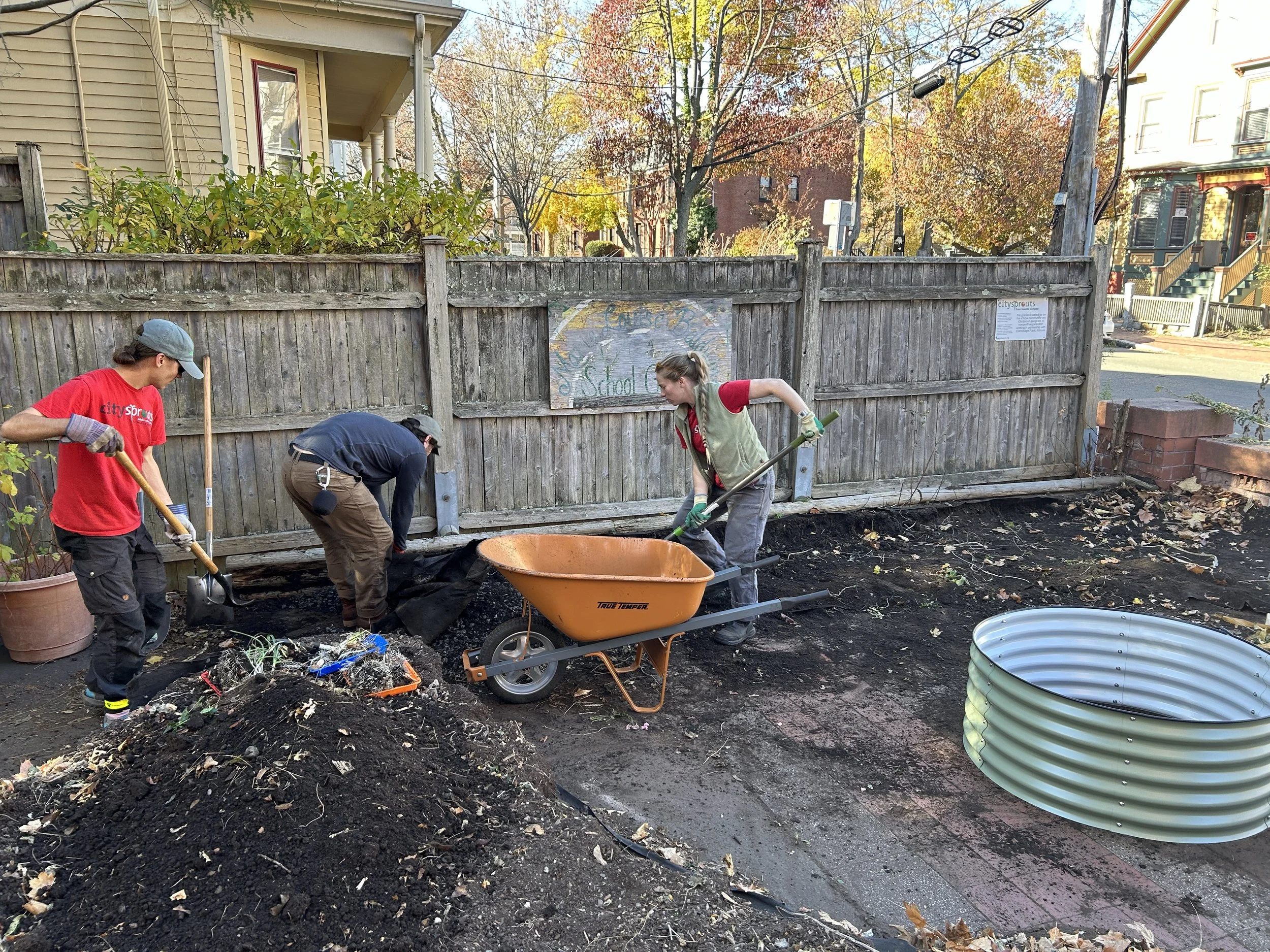
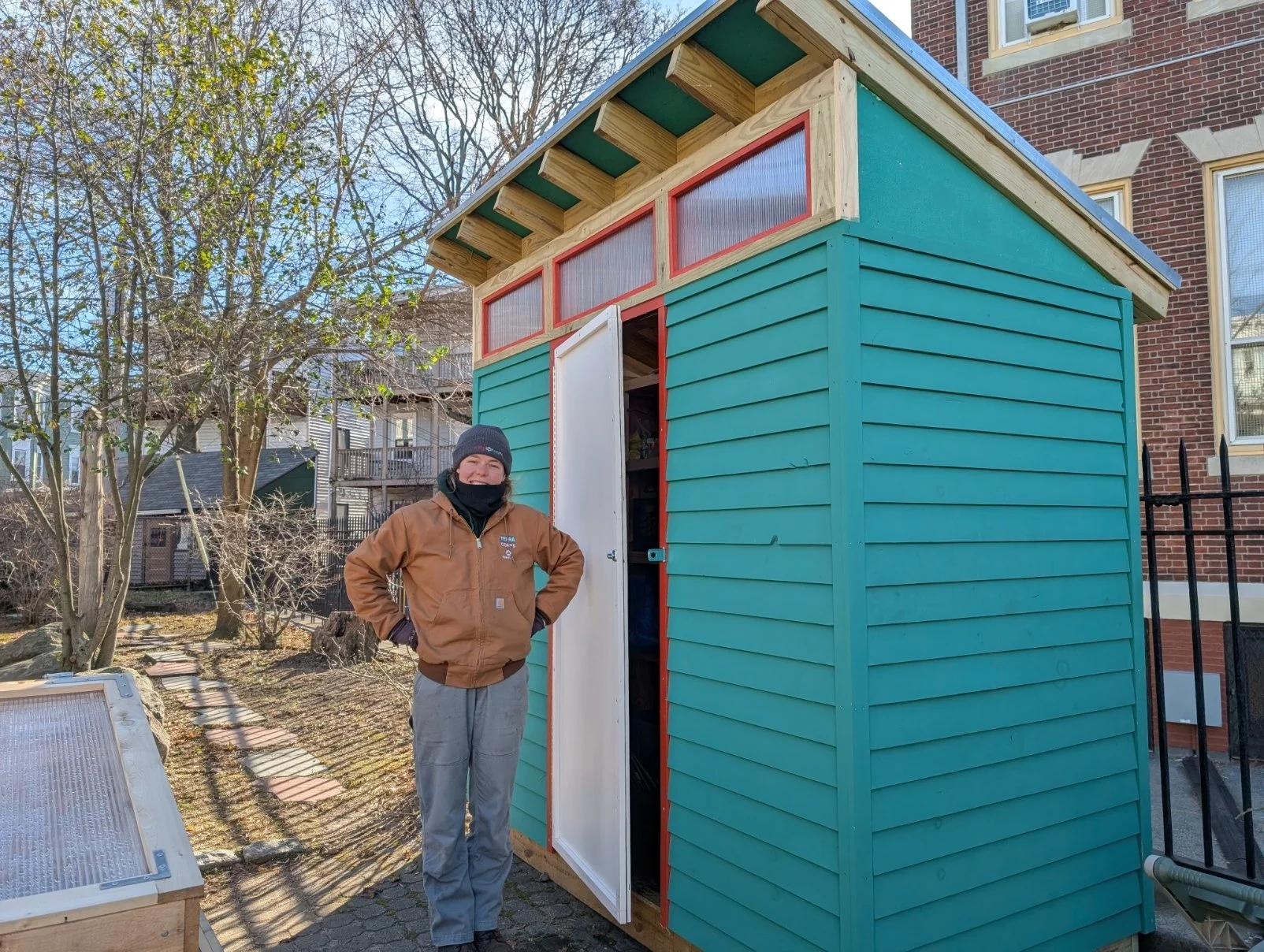
At this point, Stella or Maddie will account for the amount of trays they have growing for each seed before heading out in the iconic CitySprouts truck to support the gardens with special maintenance. I was able to stop by during one of their truck excursions where they were checking in on the raised garden beds at Amigos. It’s typical for parts of the wood that make up a raised bed to be worn and weathered to the point of needing to be replaced; this winter was especially rough since so much snow piled up that a huge snowplow accidentally ran right through one of the garden beds! While things looked to be in great condition overall, a few parts of two raised beds needed to be replaced. After hammering out wooden poles holding the beds together, new pieces of wood were sawed to fit together and pushed into place. This can be quite a dirty (pun intended as dirt flew everywhere) process, but seeing the garden come together after our efforts was extremely satisfying and worth every second!
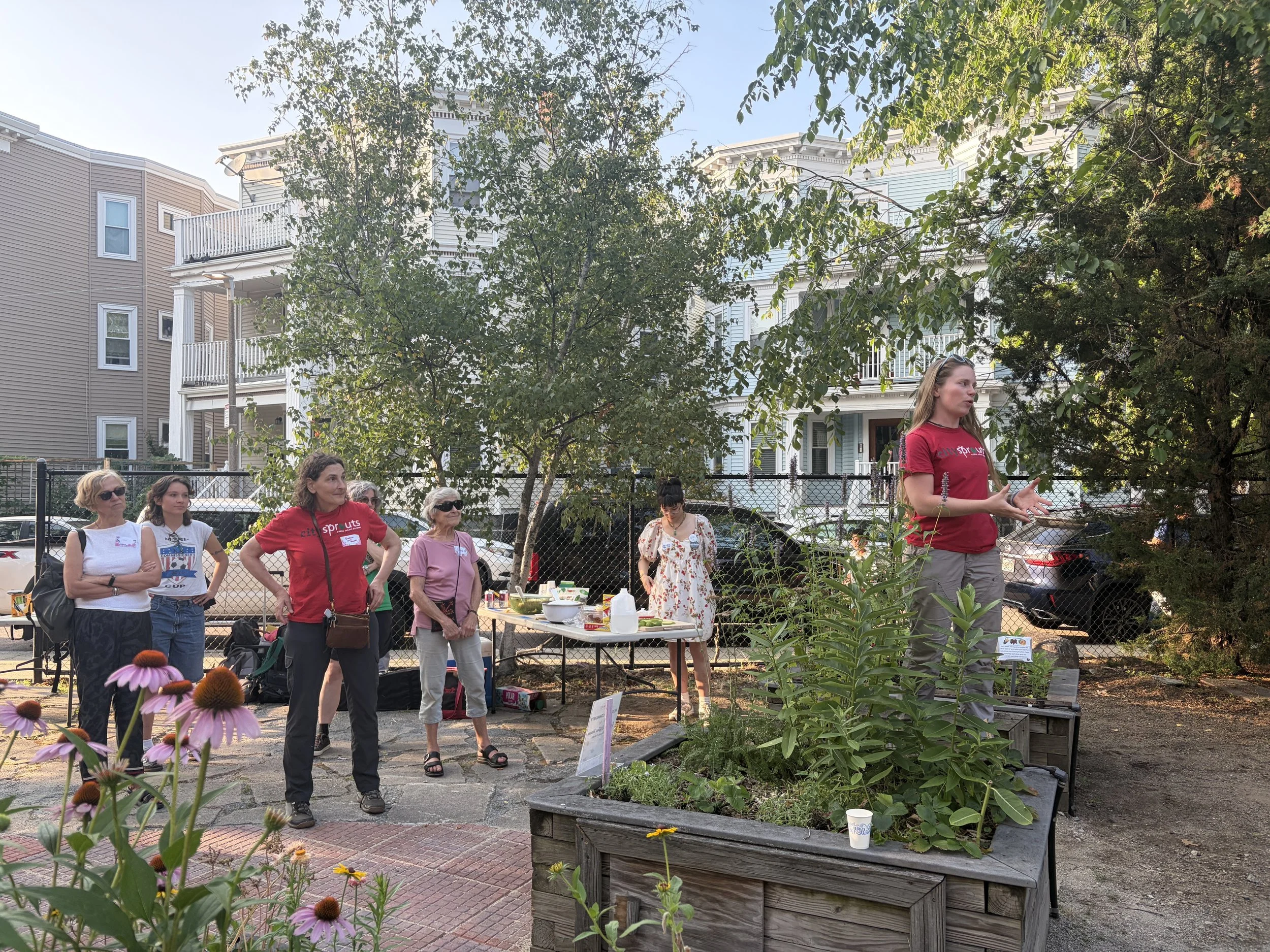
Throughout the growing season, Maddie and Stella also support with ensuring enough supplies are present for garden educators. From fresh dirt to rope and poles for trellis making, CitySprouts’ Operation Team makes rounds to each garden in Boston and Cambridge to deliver necessary items and touch base with the site. When they’re not directly working to maintain the gardens, Maddie and Stella can also be found leading what CitySprouts refers to as “Community of Practice” (CoP). During a CoP, garden educators further their professional development in different areas including urban agriculture. A fun and important CoP Maddie and Stella led in preparation for late spring/early summer was centered around seedlings. For this CoP, everyone gathered in a circle as Maddie described each seedling a garden educator could receive for their garden sites. Then each seedling was passed around for everyone to touch, smell, and have an overall closer look at each plant. Garden educators had a chance to learn about the differences between similar plants and determine how best to nurture their growth. When everyone felt comfortable, Stella and Maddie began distribution of the seedlings to each Garden Educator; since each garden’s capacity is different, there isn’t a uniform type or number of plants required and a lot of care and love is demonstrated in the Operation Team’s handling and distribution of the seedlings.
Seeing the Garden Educators and Operations Team constantly communicate during the CoP and beyond about how to take care of their gardens was such a treasure from my time at CitySprouts because I felt the joy and intention that went into every process. I have only described a fraction of the strenuous and thoughtful work the Operations Team contributes to year round, but I hope it can give you a bit more insight into what can go into taking care of each and every one of CitySprouts’ 25 gardens.